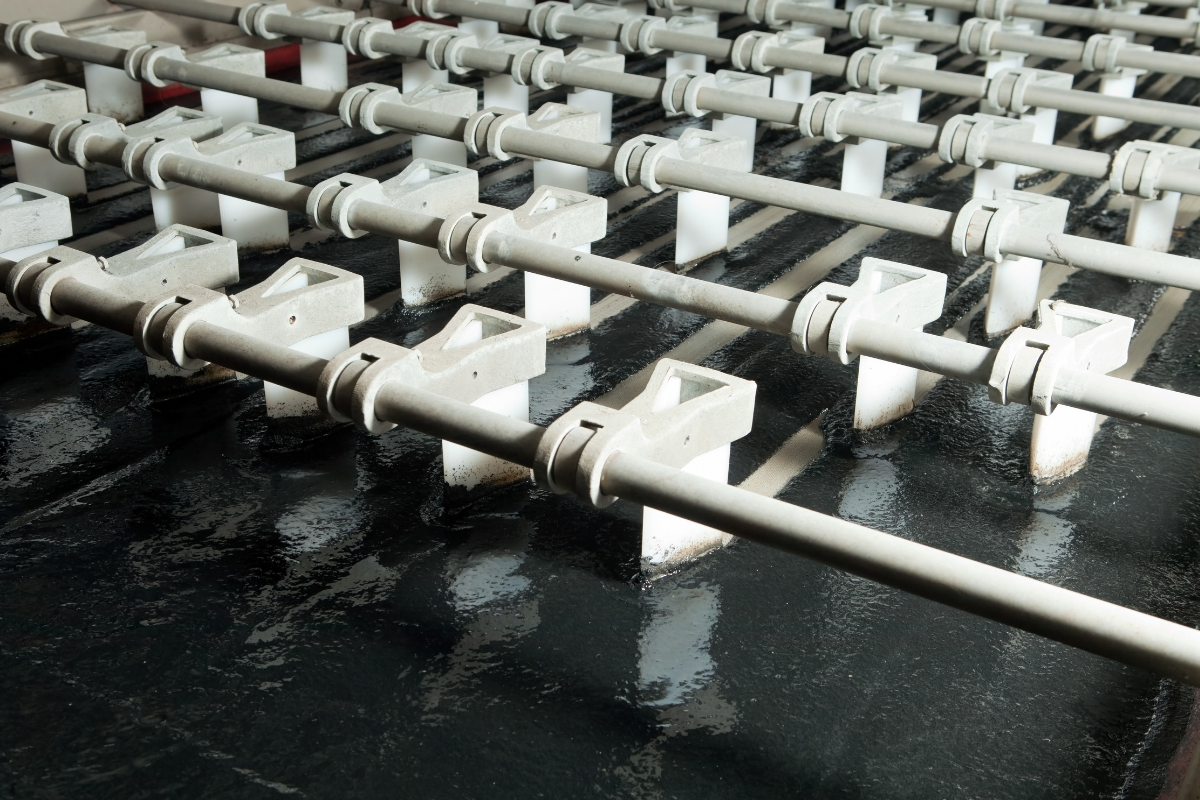
Tjaden runs dewatering operations to keep construction sites dry, alongside a dedicated department for aquifer thermal energy storage (ATES) and its regular business operations. Alex van Hoof works there as a safety expert, and three years ago he was still using a system where filing a single report could take ten minutes and left nothing behind that could actually be analyzed. When Tjaden needed to meet Safety Culture Ladder (SCL) step 3, the question became how reporting and record-keeping could actually improve. As it happened, a new project manager had just joined who already had good experience with SafetyFirst from a previous employer. A small group dug in, tested the app against their own requirements, and the decision came together quickly.
The old way of running toolbox talks mostly preserved itself: people discussed the toolbox together, signed a piece of paper, and the paper ended up in the trash.Today there are 53 toolboxes logged in the system, with the ambition to double that in the coming year.
“What's best about it is that it also works as a reference. I sometimes hear from our people that they'll say, oh right, I actually looked that up again, because how did that go again?”
Reports now reach the right manager automatically. When a report doesn't naturally land where it should, Alex is the safety net: he keeps an overview and makes sure it quickly reaches the right person.
“I used to have to build a paper file for every complaint too, so I was effectively doing double work. Now I just forward everything straight to the right people.”
At Tjaden, trust is the foundation the entire reporting culture rests on. People only report something if they can trust that it will be handled sensibly.
“That trust is really important, because it's down to the people themselves whether they report something or not.”
At Tjaden, it's explicitly not about assigning blame, but about recognizing patterns. Leadership and managers emphasize that constantly. That trust sometimes has to be protected quite literally: if someone would rather not report under their own name, Alex enters the report into the system himself, so the manager doesn't know who it came from. A threshold still exists around smaller injuries too: minor cuts and scrapes often go unreported and get quietly handled with a bandage instead. Alex tends to hear about it anyway, through the grapevine, and still brings it up in conversation afterward.
“I think I end up hearing about roughly 80% of incidents. That other slice is something I'm looking into further. I am convinced that we're getting a lot more information in since we started using SafetyFirst than we did before.”
For Alex, the difference between VCA (a Dutch and Belgian workplace safety certification) and the Safety Culture Ladder comes down to exactly this kind of conversation. VCA, in his view, is mostly about documentation: is the policy on paper, is there a signature underneath it? The SCL audit, by contrast, goes straight into conversation with people on the shop floor: at a company of 90 people, around 25 employees had to be interviewed.
“The SCL really looks at the culture. How do people handle things internally, what's the attitude. I find that a lot more useful than a standard that mainly asks how well it's been documented.”
According to Alex, that culture is also carried by the fact that teams know each other well, outside of work too. At Tjaden, several fathers and sons, and even a son-in-law, work together in the same fixed teams.
For anyone just starting out with certification, or with a system like SafetyFirst,Alex's advice is not to start too big. Tjaden rolled out the app deliberately with a small team and kept a sharp focus on what the app was and wasn't meant for.
“Think it through properly: what do I actually want from this app? People need to be able to file a report and read a toolbox, and that alone already covers a large part of it. Other departments here also wanted to move their own forms into the app right away. We held that off: stick to what you know, and the foundation stays solid.”
Tjaden also kept things manageable in practice: only the larger, longer-running projects got a permanent place in the app, while shorter jobs stay easy enough to trace through GPS. That keeps the list manageable, even with projects spread across the Netherlands and Belgium.
“We didn't reinvent the wheel. A lot of companies use this system, and not without reason. But of course it still has to fit your own company, otherwise it's still pointless.”
Save Traffic Netherlands
Kemkens

Dura Vermeer

Movares

Hollandse Delta Water Board

Arcadis